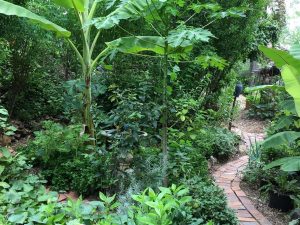


For those keen to try your hand at growing your own food, it can be tempting to rush out to the hardware store and load up on retail garden products. Using bags of premium soil, bagged mulches, soil amendments, slow-release fertilizer, the cost can quickly add up. Gardening this way quickly adds up. At minimum bags of decent soil are at least $30/65 litre bag, shredded mulches come is at about $14-$17/bag these days and then you have bagged compost, aged manures, etc. The cost for a relatively small bed to grow some tomatoes and lettuce can quickly add up to over $400. Obviously, this is not practical, and those of us who garden regularly know that this is not the way to go about growing backyard food in the long run.
There are many frugal (i.e. we don’t have to rush out and buy a heap of retail products), sustainable and very successful ways to establish new garden beds for growing edible plants. One of our favourite is the Lasagna Method.
The Lasagna Method relies on layers of organic matter (i.e. cardboard) and nitrogen rich materials (like green waste and manure). If you have compost, soil, old potting mix, eggs cartons, crushed up egg shells, worm castings, mushroom waste or compostable food scraps then feel free to add them to the layering as well. Sprinkling a handful of garden lime per square meter of garden bed will also accelerate the conversion of your lasagna garden into rich soil.
Step 1: Clearing
Pick a sunny position in the garden (6 hrs of sun is ideal). Remove any large woody plants. It is fine to leave soft weeds and grass.
Step 2: Cardboard
Cover the area in cardboard. Ensure that the layers overlap by about an inch to prevent grass growing through the joins. Two layers is enough, but up to four is ok so long as the cardboard is well wetted once in place. This is most easily achieved by hosing it for about 5-10 minutes per 2 square meters of garden bed (but this will depend on how many layers of cardboard you use). Below phone is from Jason Hauser.
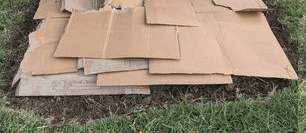
Step 3: Manure
Add a layer of green material like cow or horse manure. Woody weeds removed in Step 1 can be added to this first layer of green material. The first photo below is from Jason Hauser.
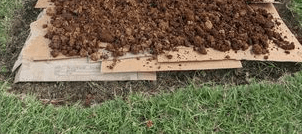

Step 4: Layering
Alternate layers of layers of organic matter (i.e. egg cartons) and nitrogen rich materials (like green waste and horse manure). Avoid fresh poultry manure (or use sparingly) as it is considerably more potent than cow manure, for example. Here we have an abundance of horse manure available inexpensively in bags on the side of the road.
If you have compost, soil, old potting mix, eggs cartons, crushed up egg shells, worm castings, mushroom waste or compostable food scraps then feel free to add them to the layering as well.


Step 5: Lime
Sprinkle a handful of garden lime per square meter of garden bed. This helps balance the pH of the decomposing compost and provides calcium for the future growing plants. Using lime this way will accelerate the conversion of your lasagna garden into rich soil.
Step 6: Mulch
Finish with a layer of mulch. Forest much is one of the cheapest from the landscaping people. You can also use baled sugarcane mulch. My advice is to find a cane farmer in your region. Most cane farmers now sell (and deliver) their bales cane. It is much cheaper this way than buying retail, it is also a bit more effort. Otherwise, bales can be found at the local produce stores or landscaper for about $13/bale.

Step 7: Water
Give the whole bed a really good soaking with the hose.
Step 8: Planting
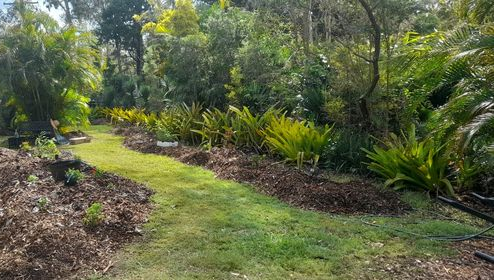
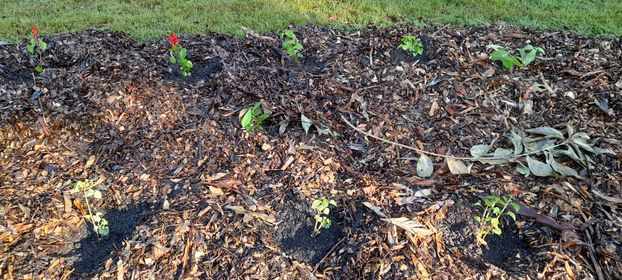
It is a good idea to allow the bed to mature for a few weeks. This allows the heat (which can damage sensitive roots) of the decomposing materials to subside. However, if you are impatient, it is generally ok to plant out into pockets of soil inserted into the beds. You can do this by digging a hole (twice the size of the pot you wish to plant) into the bed. Then you fill the hole with good soil. Plant your plant and water in very well.

A spaded border around the edge helps prevent grass runners re-entering the garden bed. Do this by using a sharp spade and dig a v-shaped drain, approximately 10 cm deep, around boarder.
This method can be used to create garden beds of all shapes and sizes.
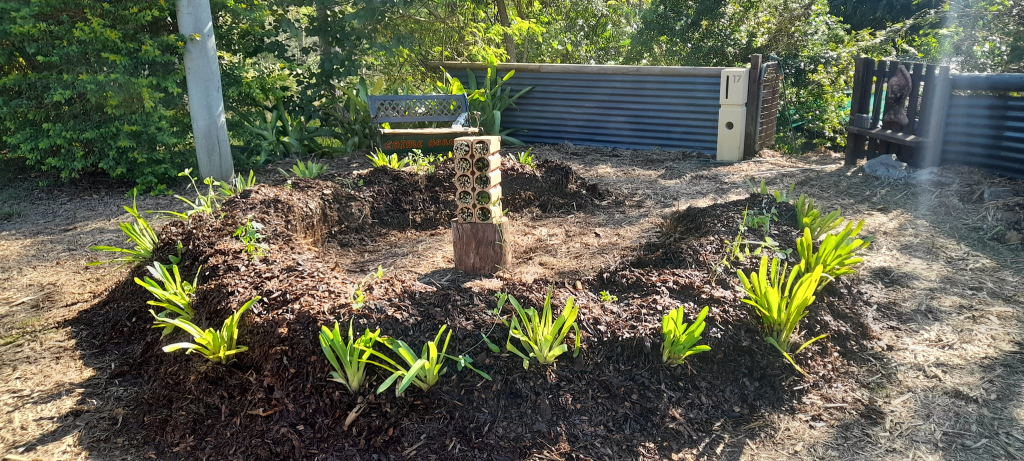
Yes the whole process is more effort than going out an buying a bag of soil from a retail outlet which is, let’s face it, convenient but it is also expensive and you have to lug the bags of heavy soil around. With lasagna gardening the soil is built up, from mostly waste materials. The end result is healthy plants grown in a sustainable, waste minimising way. This is definitely how we do it here.
 Brisbane Edible Gardening