

There is so much information already online regarding composting. The basic concept is to layer carbon rich material (i.e. cardboard, forest mulch and small sticks for example) alternatively with nitrogen rich material (such as manure, green cuttings, coffee grounds). The layer of carbon should be about 3 times as thick as the layer of nitrogen rich material. In other words build the pile up in a ration of 3:1, carbon:nitrogen.
Locate the pile in a sunny position. Sprinkle in some garden lime and water with a dilute molasses solution (10:1) to feed the soil microbes. For more instructions look at these sites that cover composting very well:
Compost 101 – Gardening Australia (abc.net.au)
Try this system to compost as much as possible in your garden | Gardening 101 | Gardening Australia – YouTube
https://youtu.be/lGynzcwXZk4
Sheet composting
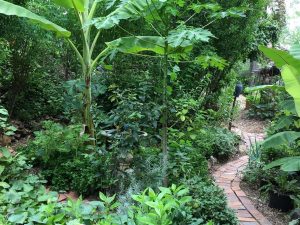
In addition to traditional compost heaps we also use sheet composting along all of our garden paths. This protects the paths using layers of horse manure, chook manure, cardboard and shredded tree mulch and puts to good use the mechanical action of walking and wheelbarrowing along the paths to speed the breakdown of the compost. It also protects the paths from erosion, retains moisture and suppresses weeds. Over time everything slowly composts and turns into soil which is raked onto the surrounding garden beds. And then we repeat the whole process over again.

Chop and Drop
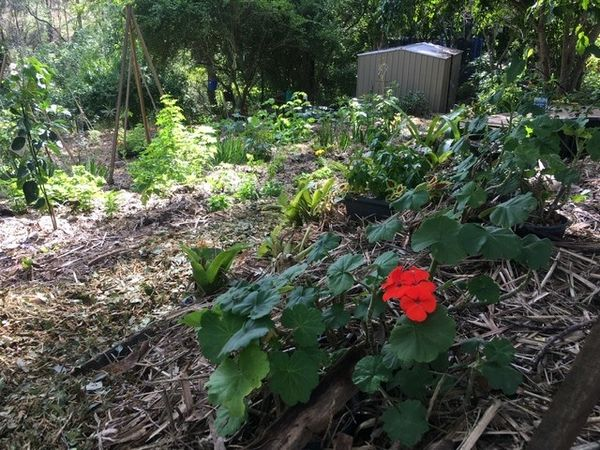
Many of the plants grown in our food forest have multiple functions. One key function of a lot of the plants is a source of carbon for chop and drop. Chop and drop is a very simply concept, meaning that when you prune your plants, instead of carting the cuttings away, you drop them in place on the garden. This enriches the soil as they break down. Plants such as native acacia species (Acacia fimbriata, Brisbane Wattle), pigeon pea, ice-cream bean and comfrey (if you have enough water) are ideal nutrient accumulating plants for this purpose. For more information on chop and drop gardening see:
Chop and Drop Gardening: The Ultimate Guide to Sheet Composting (drgreenthumbs.com.au)
Compost Bays
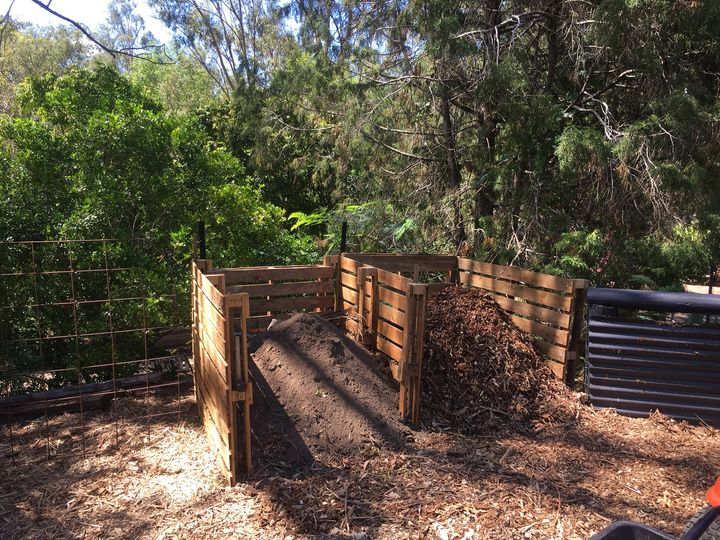
Our street front local compost hub. Friends and neighbours are encouraged to drop off their green ‘waste’ in our compost bays (where we recycle all of the nutrients back into the edible gardens) in return for fresh salad greens. What a wonderful community we live in.
 Brisbane Edible Gardening