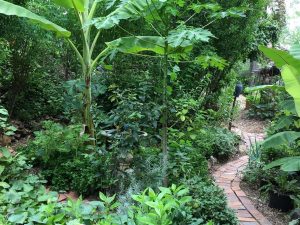


Fruit Trees
The Brisbane climate allows for a great diversity of fruit trees to be grown, however, some are more rewarding than others. This page shows the most productive fruit trees for our climate. These plants are relatively resilient however, please note that in order to fruit properly most trees require full sun and consistent watering and drainage.
It is also noted that the best time of year to plant fruit trees in during the colder months when trees can establish their roots before the spring growth spurt.
Planting your fruit tree into a square hole (rather than the usual round hole) also significantly enhances root development.
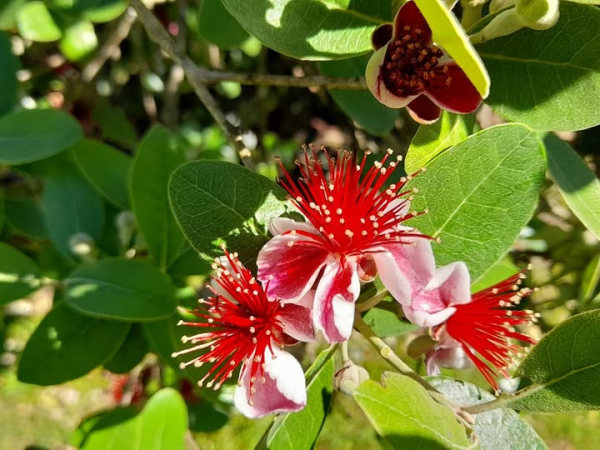
Feijoa
Common Name: feijoa, pineapple guava, guavasteen Scientific Name:Feijoa sellowiana, syn. Acca sellowiana Height: 2-5 m Width: 2 m Plant type: Perennial tree Climate: Sub-tropical, tropical, cool and warm temperate, tolerant of wind once established. Soil: Most soil types. Position: Full sun to part shade. Feijoa fruit well in our subtropical Brisbane garden, however like most guava species, they are very prone to…

Fruit Fly Resistant (relatively) Crops
Folks out this way are compiling a list of fruits that are not heavily affected by fruit fly. Has anyone had major fruit fly issues with any of these fruits? Any suggestions for the list? Mulberry varieties (Morus sp.) Pitomba (Eugenia luschnathiana) Ice Cream Bean (Inga sp.) Brazilian Guava (Psidium guineense) Jaboticaba (Plinia cauliflora) Mango…

Madagascar Bean
Madagascar Bean (aka seven year bean) Phaseolus lunatus syn. P.limensis Origin: Tropical and sub-Tropical regions Plant: in Spring Harvest: When pods have dried on vine The Madagascar bean is a perennial vine perfectly suited to Brisbane growing conditions. Best planted in Spring, this vigorous vine will last for up to 7 years (thus the common name 7-year bean).…

Kwai muk
(Artocarpus. hypargyreus, but possibly A. nitida var. lingnanensis) The Kwai muk is a tropical fruit tree from southern China. Growing it a height of 10 m it is best kept pruned to keep the delicate fruits in reach. The soft, peach sized fruits have an unusual flavour similar to a mix of a soursop and…

Choko
Grown in almost every granny’s backyard, the humble choko is making a comeback! Most of us are familiar chokos but did you know that they also come in white and yellow. You may also see a very spikey version which is apparently the offspring of a white and a green that have interbred. Chokos, not…
Something went wrong. Please refresh the page and/or try again.


 Brisbane Edible Gardening